



Chloride Channel
Cl− Channels
Chloride channels belong to a superfamily of ion channels that permit passive passage of anions, mainly chloride, across cell membrane. Chloride channels perform important roles in the regulation of cellular excitability, in transepithelial transport, cell volume regulation, and acidification of intracellular organelles. Chloride channels represent a group of potential drug targets.
The chloride channel protein (ClC) family comprises both chloride (Cl-) channels and chloride/proton (Cl-/H+) antiporters. In prokaryotes and eukaryotes, these proteins mediate the movement of Cl- ions across the membrane. In eukaryotes, ClC proteins play a role in the stabilization of membrane potential, epithelial ion transport, hippocampal neuroprotection, cardiac pacemaker activity and vesicular acidification.
All Product Categories
-
Chloride Channel Related Products (125)
Related Products (125)

-
Antibodies (3)
-
Avermectin B2a
 0 ImagesCat. No.: HY-Z8942CAS No.: 65195-57-5Avermectin B2a is an insecticide targeting glutamate-gated chloride channels (GluCls). Avermectin B2a causes hyperpolarization of nematode/insect neurons and subsequent paralysis/death. Avermectin B2a is promising for research of agricultural pests.
-
PAT1inh-A0030
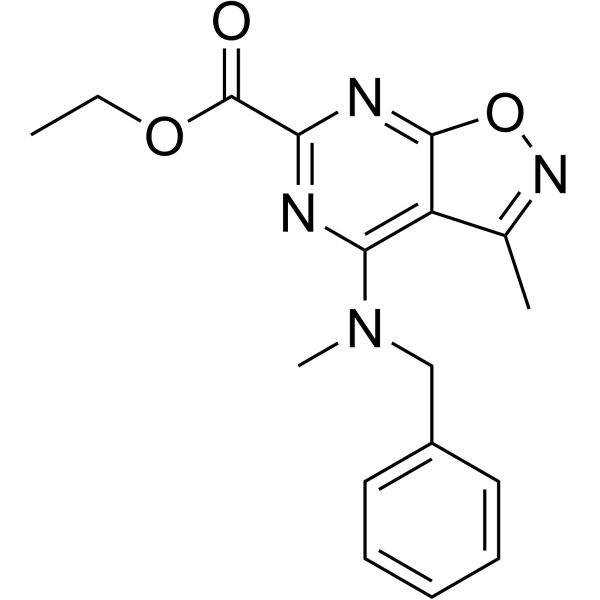 0 ImagesCat. No.: HY-162033CAS No.: 1030097-65-4PAT1inh-A0030 is a selective PAT1 (SLC26A6) inhibitor (IC50= 1.0 μM). PAT1inh-A0030 inhibits fluid absorption in the ileum of wild-type and cystic fibrosis (CF) mice (CftrdelF508/delF508) in a closed-loop model of intestinal fluid absorption. PAT1inh-A0030 can be used in the study of intestinal diseases related to CF.
-
Δ2-Avermectin B1a
 0 ImagesCat. No.: HY-15308BCAS No.: 110415-68-4Δ²-Avermectin B₁ₐ (Compound 3) is an antiparasitic agent targeting glutamate-gated chloride channels (GluCls) in the neuromuscular system of invertebrates. Δ²-Avermectin B₁ₐ enhances chloride ion influx, leading to hyperpolarization of the neuromuscular cell membrane, inhibition of neural signal transmission, and ultimately paralysis and death of parasites. Δ²-Avermectin B₁ₐ is promising for research of agricultural pests.
-
Unoprostone
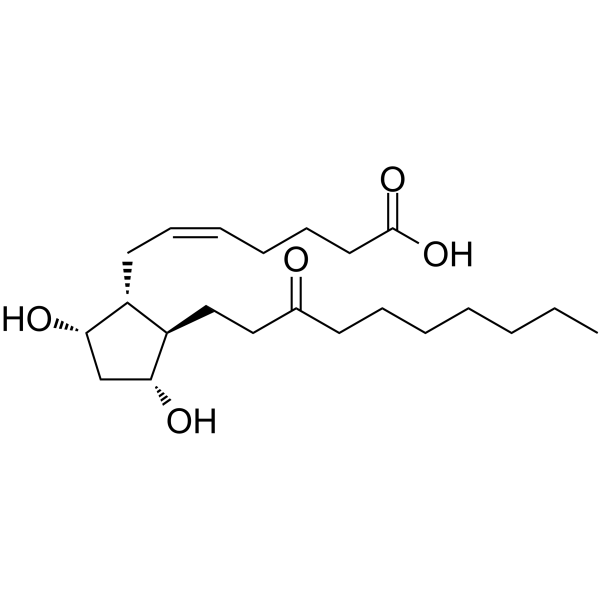 0 ImagesUnoprostone, a prostaglandin F2α analog, is a large conductance Ca2+-activated K+ (BK) channels and ClC-2 type chloride channels activator. Unoprostone reduces oxidative stress- and light-induced retinal cell death, and phagocytotic dysfunction. Unoprostone reduces intraocular pressure and can be used for the study of glaucoma, ocular hypertension and retinitis pigmentosa.
-
Adenophostin A
 0 ImagesCat. No.: HY-142117CAS No.: 149091-92-9Adenophostin A is an IP3 receptor (inositol 1,4,5-trisphosphate receptors) modulator and Ca2+ releaser, with an IC50 of 1.3 nM, an EC50 of 1.4 nM, and a Ki of 0.18 nM in rats, and an IC50 of 0.95 nM in humans. Adenophostin A activates IP3 receptors, stimulates Ca2+ release from intracellular stores and microsomes, inhibits the binding of [3H]IP3 to plasma membrane receptors, and activates chloride channels. Adenophostin A resists phosphorylation and dephosphorylation by IP3 metabolic enzymes to maintain its activity, and increases cytoplasmic [Ca2+] levels via calcium mobilization from the endoplasmic reticulum of vascular smooth muscle cells. Adenophostin A is applicable to research related to hemorrhagic shock.
-
Flufenamic acid-d4
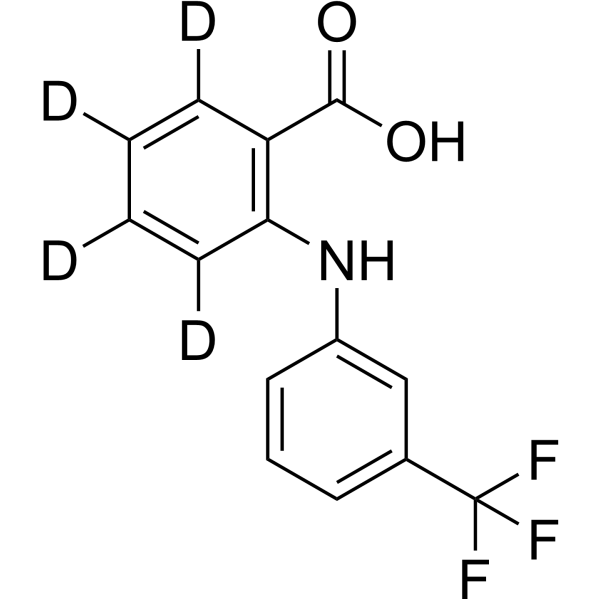 0 ImagesCat. No.: HY-B1221SCAS No.: 1185071-99-1Flufenamic acid-d4 is deuterium labeled Flufenamic acid. Flufenamic acid is a non-steroidal anti-inflammatory agent, inhibits cyclooxygenase (COX), activates AMPK, and also modulates ion channels, blocking chloride channels and L-type Ca2+ channels, modulating non-selective cation channels (NSC), activating K+ channels. Flufenamic acid binds to the central pocket of TEAD2 YBD and inhibits both TEAD function and TEAD-YAP-dependent processes, such as cell migration and proliferation.
-
PDSinh-C01
 0 ImagesCat. No.: HY-184898CAS No.: 2128304-65-2PDSinh-C01 is a reversible, non-competitive pendrin (SLC26A4) inhibitor with an IC50 of 2.5 μM. PDSinh-C01 inhibits pendrin-mediated Cl−/SCN− exchange activity, reduces cell counts, protein levels, and pro-inflammatory cytokine production in bronchoalveolar lavage fluid. PDSinh-C01 can be used in research related to acute lung injury and cystic fibrosis.
-
Allobetulone
 0 ImagesCat. No.: HY-176453CAS No.: 28282-22-6Synonyms: N066-0059Allobetulone (N066-0059) is a TMEM16A inhibitor (IC50: 0.24 µM). Allobetulone (N066-0059) can be used in anti-cancer research.
-
BTG 1640
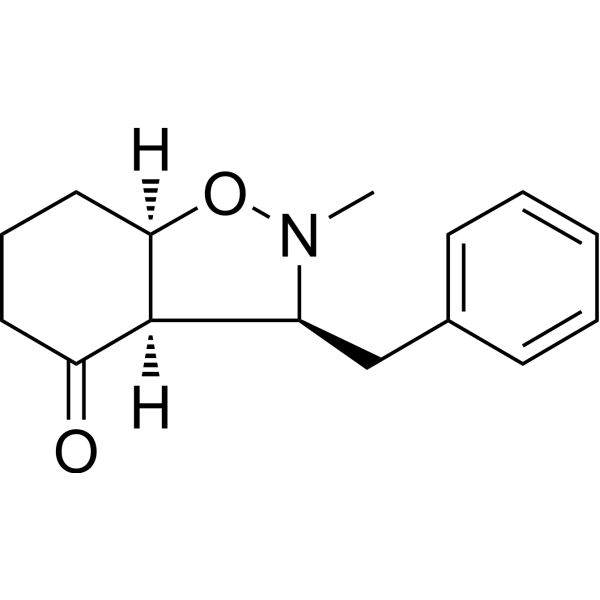 0 ImagesCat. No.: HY-106439CAS No.: 152538-59-5Synonyms: ABIO-08/01BTG 1640 (ABIO-08/01) is a potent anxiolytic isoxazoline. BTG 1640 is a selective inhibitor of GABA- and glutamate-gated chloride channels.
-
H100
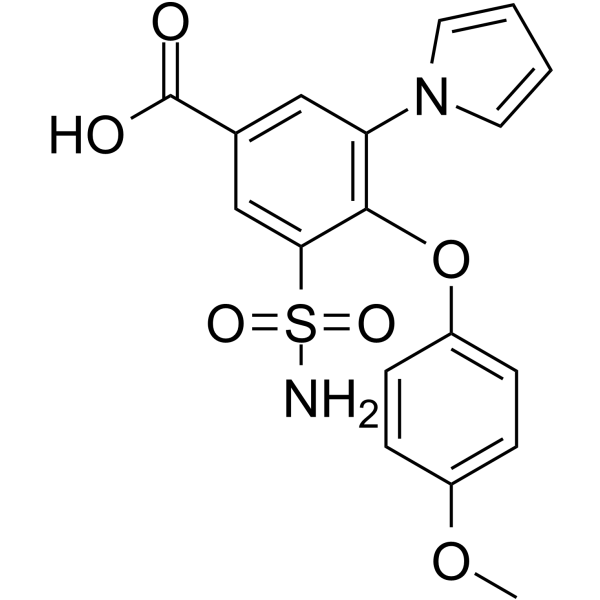 0 ImagesH100 is a Cl- transport inhibitor, with partial effects against both the NaK2Cl cotransporter and the Band 3 anion exchanger, but no effect against KCl cotransporter, in human erythrocytes.
-
AK-42
 0 ImagesCat. No.: HY-182571CAS No.: 15437-29-3AK-42 is a selective CLC-2 chloride channel inhibitor with human IC50 of 17 nM and rat IC50 of 14 nM. AK-42 binds to an extracellular vestibule above the channel pore, inhibits CLC-2 currents acutely and reversibly, including with auxiliary subunit GlialCAM coexpression. AK-42 acts as a selective tool compound for acute CLC-2 function modulation to probe CLC-2 neurophysiology. AK-42 can be used for the research of leukodystrophy and idiopathic generalized epilepsies.
-
(Rac)-Methylindazone
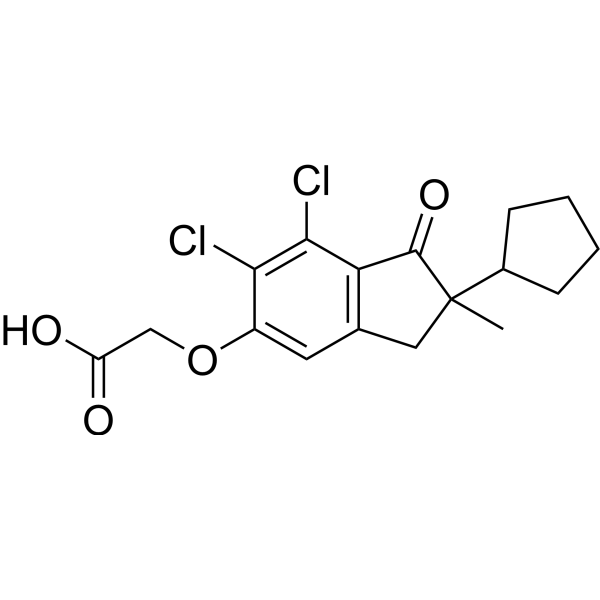 0 ImagesCat. No.: HY-12693ACAS No.: 53108-00-2Synonyms: (Rac)-IAA-94(Rac)-Methylindazone ((Rac)-IAA-94) is the racemate of Methylindazone. Methylindazone is a potent CLIC1 channel blocker.
-
Selamectin (Standard)
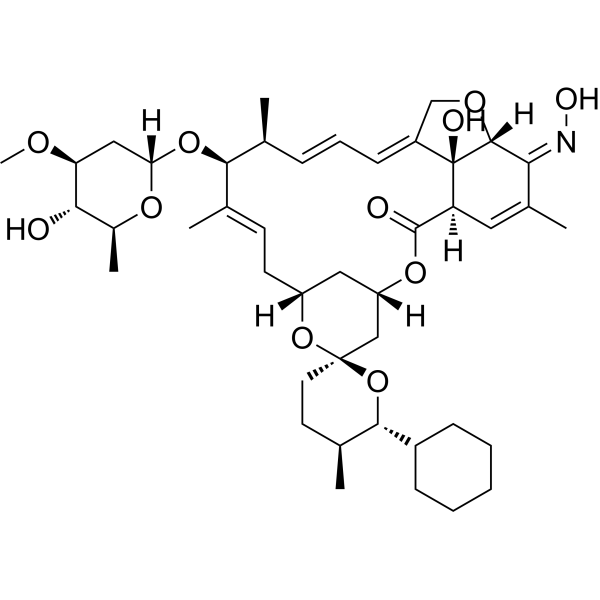 0 ImagesSelamectin (Standard) is the analytical standard of Selamectin. This product is intended for research and analytical applications. Selamectin, a semi-synthetic macrocyclic lactone, is a potent parasiticide and anthelminthic. Selamectin activates glutamate-gated chloride channels in neurons and pharyngeal muscles to prevent heartworm, Lymphatic filariae, and nematode infection. Selamectin is also a potent P-glycoprotein substrate and a P-glycoprotein inhibitor with an IC50 of 120 nM.
-
YS-01
 0 ImagesCat. No.: HY-184897CAS No.: 312724-83-7YS-01 is an inhibitor of pendrin (SLC26A4) with pulmonary protective activity. YS-01 inhibits pendrin-mediated anion exchange activity, reduces pendrin expression, and suppresses the activation of NF-κB and the production of proinflammatory cytokines. YS-01 alleviates lipopolysaccharide-induced and ventilator-induced lung injury. YS-01 attenuates ovalbumin-induced airway hyperresponsiveness, inflammatory infiltration, epithelial thickening and goblet cell hyperplasia, and reduces eosinophil and neutrophil counts. YS-01 decreases MUC5AC transcription levels induced by IL-4, reverses the reduction of airway surface liquid volume, and inhibits the increase of apical SCN− concentration in epithelial cells. YS-01 can be used in studies related to lung injury and allergic asthma.
-
Atractyloside potassium salt (Standard)
 0 ImagesCat. No.: HY-N1462RCAS No.: 102130-43-8Atractyloside (potassium salt) (Standard) is the analytical standard of Atractyloside (potassium salt). This product is intended for use in research and analytical applications. Atractyloside potassium salt is a powerful and specific inhibitor of mitochondrial ADP/ATP transport. Atractyloside potassium salt inhibits chloride channels from mitochondrial membranes of rat heart. Atractyloside potassium salt activates autophagy, inhibits ANT2, mTOR and promotes the activation of p-AMPK. Atractyloside potassium salt has anti-cancer effects on non-small cell lung cancer and can inhibit liver steatosis. Atractylodesin potassium salt has nephrotoxicity.
-
Leptophos oxon
 0 ImagesCat. No.: HY-114811CAS No.: 25006-32-0Leptophos oxon, a metabolite of leptophos, is a GABAA receptor chloride channel inhibitor with an IC50 values of 89.6 μM. Leptophos oxon inhibits GABA-induced chloride influx, binds to GABAA receptor-associated TBPS sites, and inhibits TBPS binding to voltage-dependent chloride channels. Leptophos oxon is a insecticide. Leptophos oxon can be used for the research of neurological disease.
-
Stepronin-d5
 0 ImagesCat. No.: HY-W758934Synonyms: Prostenoglycine-d5; TTPG-d5; Tiase-d5Stepronin-d5 (Prostenoglycine-d5; TTPG-d5; Tiase-d5) is the deuterium labeled Stepronin (HY-A0234). Stepronin (Prostenoglycine) is an orally active expectorant (inhalation administration is preferable to oral administration). Stepronin inhibits airway secretion in vitro by reducing Cl- secretion from epithelial cells and mucus glycoprotein secretion from submucosal glands.
-
Anti-ANO1/TMEM16A Antibody
 0 ImagesCat. No.: HY-P990337Anti-ANO1/TMEM16A Antibody is a CHO-expressed human antibody that targets ANO1/TMEM16A. The Anti-ANO1/TMEM16A Antibody consists of a huIgG2 heavy chain and a huκ light chain, with a predicted molecular weight (MW) of 150 kDa. The isotype control for the Anti-ANO1/TMEM16A Antibody can refer to Human IgG1 kappa, Isotype Control (HY-P99001).
-
NS5818
 0 ImagesCat. No.: HY-122077CAS No.: 674299-39-9NS5818 is a potent chloride channel inhibitor. NS5818 inhibits acidification and bone resorption. NS5818 has the potential for the research of osteoporosis.




